


Featured Oso Creek Photos
All photos and videos taken within a two-mile radius
along Oso Creek in Corpus Christi, Texas

Buy coffee table books with many of these pictures
Great Egrets "wade in shallow water (both fresh and salt) to hunt fish, frogs, and other small aquatic animals. They typically stand still and watch for unsuspecting prey to pass by. Then, with startling speed, the egrets strike with a jab of their long neck and bill." The distinction between a heron and an egret "is rather vague, and depends more on appearance than biology. The word "egret" comes from the French word aigrette that means both "silver heron" and "brush", referring to the long, filamentous feathers that seem to cascade down an egret's back during the breeding season." (Wikipedia and AI summary)

Black-bellied whistling ducks. "They are highly adaptable and frequently congregate in urban environments, parks, and golf courses. They are 'quite tame, even in the wild.' They are very social, forming large flocks when not breeding. Generally, they are permanent residents."(AI summary, Wikipedia)

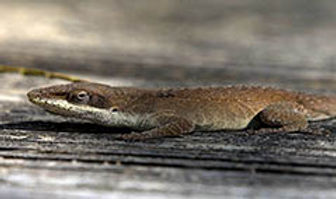
Anole Lizard. "Typically green, these lizards can change color to brown or grey based on temperature, stress, or humidity levels. They are opportunistic feeders, and primarily feed on insects. Hunting is done by sight, and they generally show a strong preference for moving prey over non-moving. Many will chase down or sneak up to a potential prey item, while others are sit-and-wait predators that pounce on prey when it gets close." (Google, AI summary)
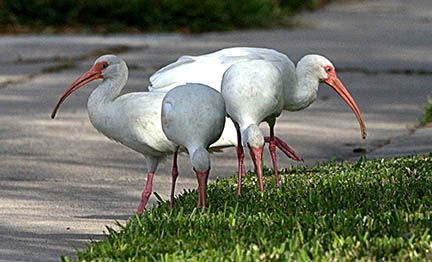
White ibises look for food, probably worms or other insects. On an average day, an "adult American white ibis spent 10.25 hours looking for food, 0.75 hours flying, 13 hours resting, roosting, and attending to their nests. Much of the time roosting is spent preening, biting and working their feathers with their long bills, as well as rubbing the oil glands on the sides of their heads on back plumage." (Wikipedia)
A Great Blue Heron. They stand "4 - 6 feet (115-180cm) tall with a wingspan of 5.5 - 6.5 feet (167-201 cm). They are the largest heron native to North America." They are "opportunistic hunters that consume a varied diet, including fish, shrimp, crabs, small mammals, reptiles, and amphibians." Despite their formidable, almost scary, appearance, they "weigh only 1.82–3.6 kg (4.0–7.9 lbs.)." (Wikipedia, AI summary)

Retama plant (I think) at sunset. The Google ID was "most likely Weeping Willow." Their animal IDs are spot-on, but I often question their plant IDs, not that I'm any kind of expert. As I was reading about retamas (also known as Jerusalem thorn), I discovered that they "belong to the legume (pea) family, and their pods are a vital food source for local birds and small mammals." (Wikipedia)

The golden-fronted woodpecker's diet is adult and larval arthropods, some aerial insects, much fruit and nuts, and corn. It has been observed predating other birds' eggs. The species forages mainly in trees, especially on major limbs and typically below 20 ft. It also forages on open or grassy ground but seldom under brush. It takes its food by gleaning, pecking, probing, and least frequently by aerial flycatching. (AI summary)

Black-crowned Night Heron. True to their name, these birds are most active at night or dusk, often spending daylight hours hunched over in trees or branches near the water's edge. They are widely distributed and commonly found in wetland habitats such as marshes, ponds, and lakes across North America. As predators, they primarily consume fish, but their diet is varied. (AI Summary)

House Sparrow. I've photographed these for years in the same section of brush. They are "...strongly associated with human habitation. Though found in widely varied habitats and climates, they routinely feed at home and public bird feeding stations. Because of its numbers, ubiquity, and association with human settlements, the house sparrow is culturally prominent. It is extensively, and usually unsuccessfully, persecuted as an agricultural pest. It has also often been kept as a pet, as well as being a food item and a symbol of lust, sexual potency, commonness, and vulgarity." (Wikipedia)

Three male Great-tailed Grackles look up at the sky. I don't know what they were watching, perhaps a hawk or other predator. Osprey hang out nearby. Although larger, I've never seen an osprey show any interest in grackles. Grackles are "highly social and often gather in large, noisy flocks. They are known for loud, complex vocalizations and can be found in both urban and agricultural settings. The males are large and glossy black, sometimes with an iridescent purple or blue sheen and distinctive yellow eyes. They have long, tapered tails that can make up almost half of their total length."

A female Northern Cardinal. They are "primarily pale brown or buff-colored, with warm reddish tinges on their wings, tail, and crest. Unlike many other female songbirds in North America, female cardinals sing complex songs, often to defend their territory while sitting on the nest. They typically build nests in dense shrubs or trees, constructed from twigs and grasses, usually located 4 to 8 feet off the ground."

With rain in the forecast, I headed out for a walk earlier than normal and reached this spot when the first sprinkles hit me. I've always loved the old fence lines adjacent to Oso Creek. They echo a different time and mindset. How old are they? Who put them up? Whose land was on one side and whose was on the other? The first time I reached this spot, I thought I had hiked a long way, but it didn't seem nearly far enough when I stopped to take the picture. I wanted to keep going, but the whole area would quickly turn to mud in a heavy rain. As always of late, the weather teased. The sun came out by the time I reached my car. It did finally rain, but much later.

Like many birds, Great Egrets form "monogamous pairs each season. Whether the pairing carries over to the next season is not known. The male selects the nest area, starts a nest, and then attracts a female. The nest, made of sticks and lined with plant material, could be up to 3 feet across. Up to six bluish green eggs are laid at one time. Both sexes incubate the eggs, and the incubation period is 23–26 days.

Forster's Tern (Google ID: Forster's Tern in its non-breeding or immature plumage) hovers above Oso Creek before dive-bombing to capture prey. The Forster's Tern forages by flying slowly over the water to scan for fish, then dives to capture prey in the bill. Breeding adults perform spiraling courtship flights and also parade through the colony in tandem with raised bills.

A Shrike along Oso Creek. This cute little bird is known as the "butcherbird" because it impales its prey on thorns or barbed wire spikes. They lack the strong talons of raptors, so they rely on their hooked bills for catching and killing prey.

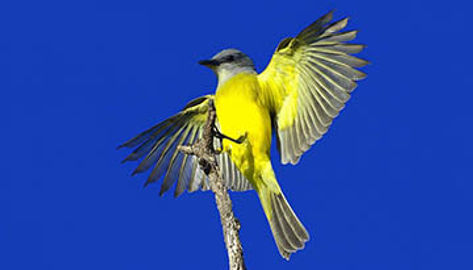
A Kingbird. They are "the 'warriors' of the bird world, because they aggressively defend nests, sometimes landing on the backs of hawks, crows, and even chasing humans or pets. They are "flycatchers" that wait on an exposed, high perch, then fly out to capture insects (bees, wasps, beetles) in mid-air.
Sun dips toward the horizon on Oso Creek

A female Green Kingfisher, as per Google. I've photographed these birds for years in the same area along Oso Creek. I assume that they are all related in some form or fashion. If not directly related, they must be part of the same group that nests or hangs out nearby.

Summer Tanager in the rain. I was reading that these birds are "famously known as 'bee birds' because they specialize in catching bees and wasps. They kill them by beating them against branches and rubbing them to remove the stinger before eating."


Stand of giant cane along Oso Creek (ID as per Google images). Google summary: "It is a tall, bamboo-like perennial grass that can grow up to 20 feet. It is considered an invasive species in many areas, particularly in Texas, where it outcompetes native vegetation by absorbing large amounts of water. It thrives in moist habitats such as riverbanks, wetlands, and irrigation ditches. The plant has thick, cane-like stems and long, flat leaves."
Old trucks on farmland near Oso Creek. I took these years ago when I was starting to explore the area. It was more rural back then. I've always been a fan of people in the country who put old vehicles out in a field as, it seems to me, a form of artistic expression. I assumed this was a similar thing. I went back later, perhaps a few months or a year, and they were gone. SEE THE VIDEO

4-8-26 This section along Oso Creek is only a short distance from the barren landscape I posted on 8-7-26. It always remains lush, drought or no drought. The topography is such that a little bit of water almost always run through this spot, so I assume that is the reason for the difference. There could be other factors, like slight differences in soil composition. I don't think that palm trees are native to Corpus Christi, but the concept of "invasive" or "non-native" has always seemed esoteric. The European settlers who came to America were likely viewed as invasive by the Native Americans.

4-7-26 Oso Creek creek bed (mud flat, flood plain-- choose your term) a few days after a heavy rain. This section was largely passable. Normally, after a heavy rain, it would be muddy, but it was so dry I barely left footprints. I guess the ground just soaked up all the water, a function of the drought. There were plenty of spots that had standing water and mud, so I wasn't able to explore like I had before.

AI Animation made of photos taken along Oso Creek. Diamondback water snakes, garter snakes, and a baby rattlesnake. They all provide a valuable contribution to the ecosystem. SEE THE VIDEO

Section of creek bed along Oso Creek at Sunset

Along Oso Creek
South Texas, along with many other places suffers droughts. While difficult on everyone, it provides the opportunity to explore areas that had been impassable mud flats. SEE THE VIDEO


The Brown Pelican is "an iconic seabird commonly found along the Atlantic, Pacific, and Gulf coasts of the Americas. They have a massive wingspan that can reach up to 7 or 8 feet, and they plunge from heights of up to 60 feet into the water to catch fish. They occasionally wander inland, and there are records of vagrants as far north as Southeast Alaska and Newfoundland and as far south as central Chile and along the Amazon River and its tributaries." (animation I made from a photo I took) SEE THE VIDEO
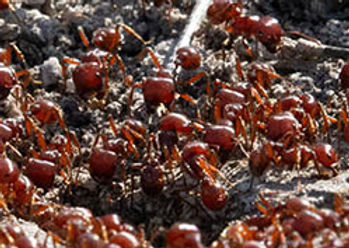
Ants, Full of Purpose SEE THE VIDEO
A silhouette of leafless trees against an orange sunset on Oso Creek. Sunsets appear red because the sun is low on the horizon, "forcing sunlight to travel through much more of the Earth’s atmosphere. This longer path allows air molecules to scatter shorter blue and violet wavelengths away, leaving only the longer red, orange, and yellow light to reach our eyes. Dust, pollution, and water droplets in the atmosphere can make sunsets even more vivid by increasing scattering." So, I guess that is one good thing that can be said about pollution.

Scissor-tailed Flycatchers perch "conspicuously on utility lines, treetops, and fence lines to watch for insect prey and defend their territories from interlopers. They are agile in the air, spreading their long tails wide to make abrupt turns and stalls. They are highly territorial, and will chase other birds out of their territories accompanied by loud, squeaky, bubbling calls."
Osprey on Oso Creek
They eat fish. They fly "30-130 feet above the water and catch fish by dive-bombing down, adjusting the angle of flight to account for the distortion of the fish's image caused by refraction." This is an animation made from a photo I took. The call may or may not be accurate. Ospreys make "alarm calls, guard calls, begging calls, and courtship calls." Quite an elaborate vocabulary. SEE THE VIDEO
Carpenter bees are traditionally solitary bees, though some species "have simple social nests in which mothers and daughters may cohabit. When females cohabit, multiple females either share in the foraging and nest laying, or one female does all the foraging and nest laying, while the other females guard." SEE THE VIDEO

Originally desert-dwelling, white-winged doves "have expanded into Texas, Louisiana, and as far as Idaho and Maine. They are now common sights in cities, suburbs, and backyards, often visiting bird feeders for seeds. They are gregarious and often feed in large flocks. They are monogamous breeders for at least the season. During courtship, males may perform displays like flapping up and gliding down in circles or bowing and fanning their tails."

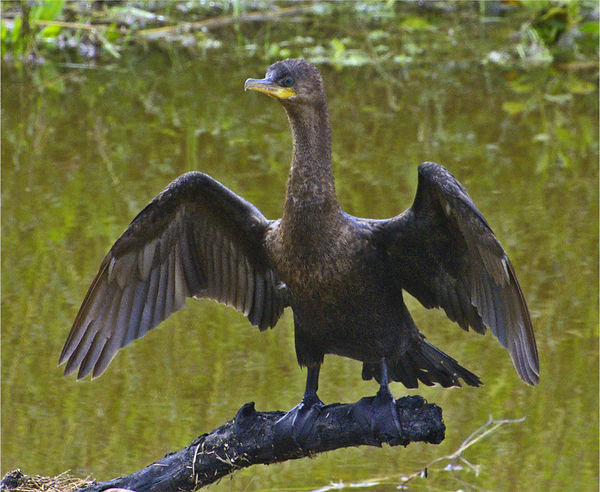
After dining on fish or other marine animals, cormorants spread their wings in the sun. I'd always thought it was to dry their wings, but there's some controversy. "Some sources state that cormorants have waterproof feathers, while others say that they have water-permeable feathers. Still others suggest that the outer plumage absorbs water but does not permit it to penetrate the layer of air next to the skin. The wing drying action is seen even in the flightless cormorant, but not in the Antarctic shags or red-legged cormorants. Alternate functions suggested for the spread-wing posture include that it aids thermoregulation or digestion, balances the bird, or indicates the presence of fish. A detailed study of the great cormorant concluded there is little doubt that it serves to dry the plumage."
Mockingbirds are "famous for their loud, continuous, and varied songs. A male Northern mockingbird may learn up to 200 different songs in its lifetime, incorporating diverse sounds it hears in its environment. Unmated males often sing throughout the night during the breeding season. They are known for being fiercely territorial, aggressively defending their nests and young by chasing away intruders, including much larger animals and even humans. They also perform a 'wing flash' display, where they half-open their wings in jerky steps while on the ground, which may help startle insects into moving." MORE PHOTOS

A Great Egret along Oso Creek. Once nearly hunted to extinction for their elegant plumes in the late 19th and early 20th centuries, the species has made a significant comeback due to conservation efforts. They can be found throughout most of the United States, with year-round populations especially common along the Atlantic and Gulf coasts. (SEE VIDEO Animation made from photos I took)
Three turkey vultures and two black vultures on a street light near Oso Creek during the recent freeze. I don't recall seeing black vultures very often. As per Google AI summary, "they don't have the superior sense of smell of turkey vultures and follow the turkey vulture to find food" when times are tough. This would seem to explain their appearance during the cold. Maybe they stay when spring comes.

Cardinals are widely considered a sign of good luck, hope, and spiritual connection, often seen as messengers from loved ones in heaven, bringing blessings, joy, and vitality, with some traditions suggesting luck within 12 days of sighting one. Their vibrant red color against winter snow also symbolizes hope and the promise of spring.

The Crested Caracara mates for life. They often return to the same nest to lay eggs and raise the babies. The male shares in child care. They eat both live and dead prey and will often follow vultures to poach their food.


A Queen Butterfly. As per AI summaries: "They are a tropical relative of the Monarch that can be distinguished by darker orange-brown wings and white dots. They have a slow, deliberate flight style. Adults sleep together in groups in trees or shrubs at night."

Cooper's Hawk. Those are feathers in the foreground. The bird had just finished eating when I took the picture. From Audubon Field Guide: The Cooper's Hawk "usually hunts by stealth, moving from perch to perch in dense cover, listening and watching, then putting on a burst of speed to overtake prey. Sometimes cruises low over ground, approaching from behind shrubbery to take prey by surprise."

A belted kingfisher dive bombs into the water. I've photographed them in this spot for years. An average lifespan is 6-10 years, so I'm guessing that they like to nest in this area, and this one is the child or grandchild (or great grandchild) of the first ones I saw. They dive off perches, straight into the water to spear fish, and can accelerate rapidly to up to 25 mph, hitting the water with barely a splash. (My summary from Wikipedia, All About Birds, and an AI summary)

Scissor-tailed Flycatchers perch "conspicuously on utility lines, treetops, and fence lines to watch for insect prey and defend their territories from interlopers. They are agile in the air, spreading their long tails wide to make abrupt turns and stalls. They are highly territorial, and will chase other birds out of their territories accompanied by loud, squeaky, bubbling calls." (All About Birds)

I took this outside our house at night. From AI summary: "This silhouette appears to be a garden orb weaver spider. The image resembles a spider backlit by the moon, creating a strong contrast. It shares characteristics with images used in photography to showcase web patterns and arachnid shapes."

White ibises look for food, probably worms or other insects. On an average day, an "adult American white ibis spent 10.25 hours looking for food, 0.75 hours flying, 13 hours resting, roosting, and attending to their nests. Much of the time roosting is spent preening, biting and working their feathers with their long bills, as well as rubbing the oil glands on the sides of their heads on back plumage." (Wikipedia)